Steam Bending
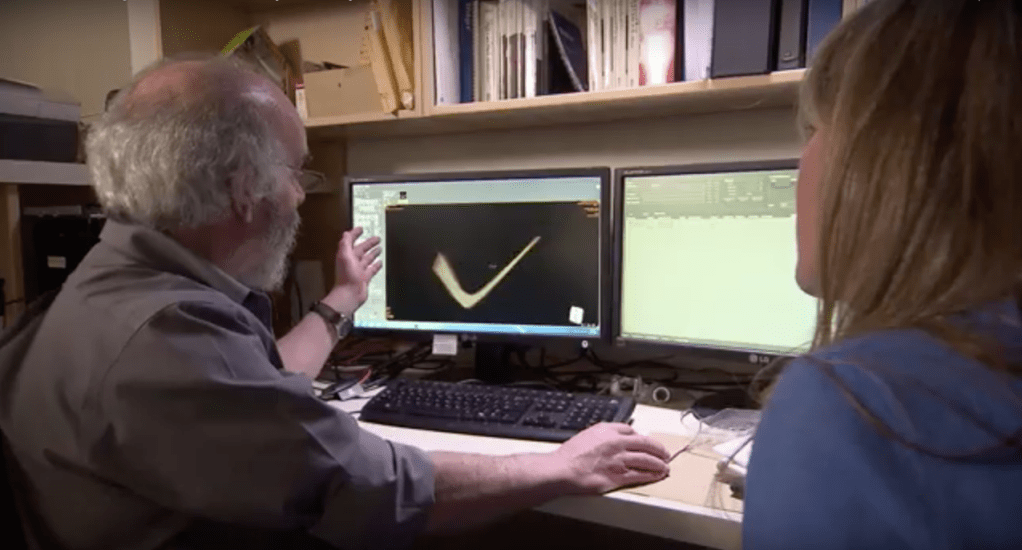
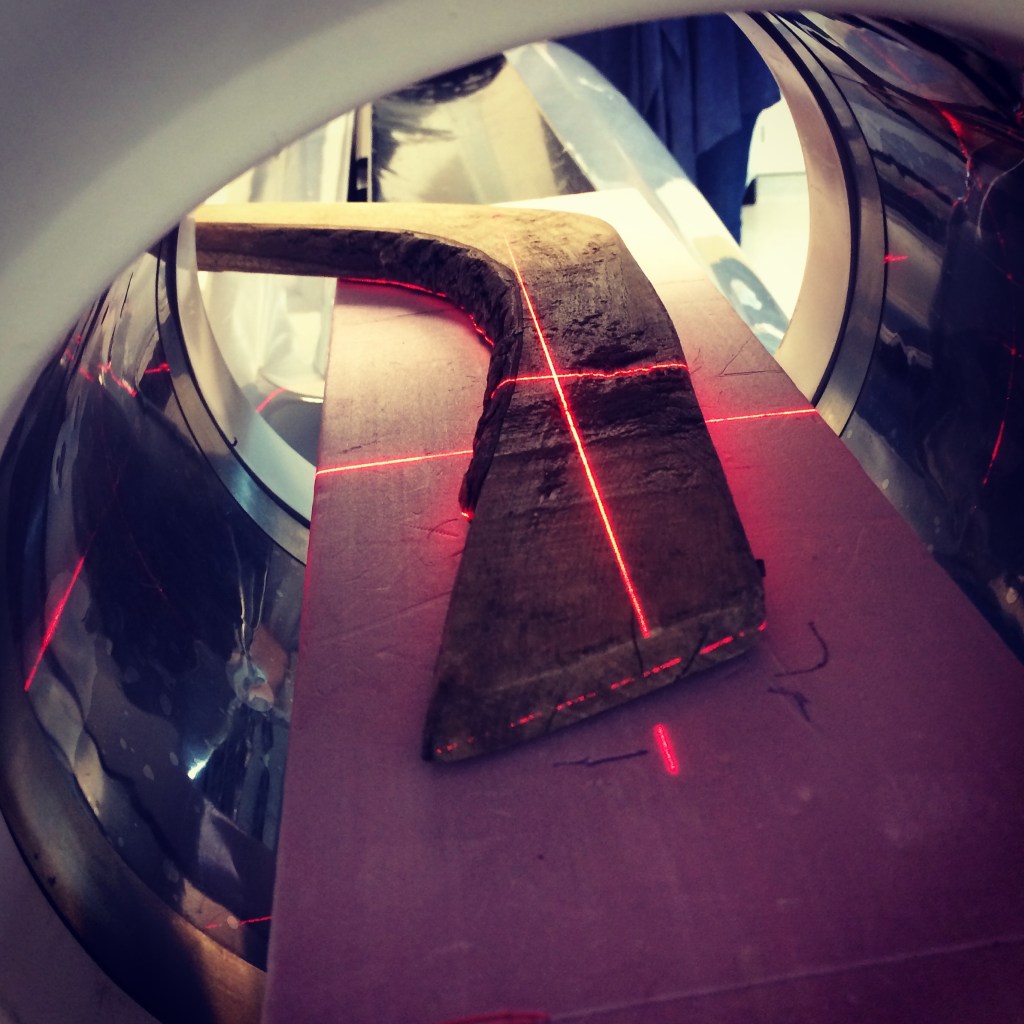
After being subjected to CT Scanning at St. Joseph’s Healthcare in London, it became apparent steam bending was used to shape the blade of the stick. The significance of this is that steam bending can only occur with in a year of the tree being felled. This then eliminates the possibility of the stick being made out of reclaimed wood or barn board. We are dealing with an old stick from the 1700s, not an old piece of wood made into a stick. (Linda Howie and Andrew Nelson pictured below)
Ship Building Tools
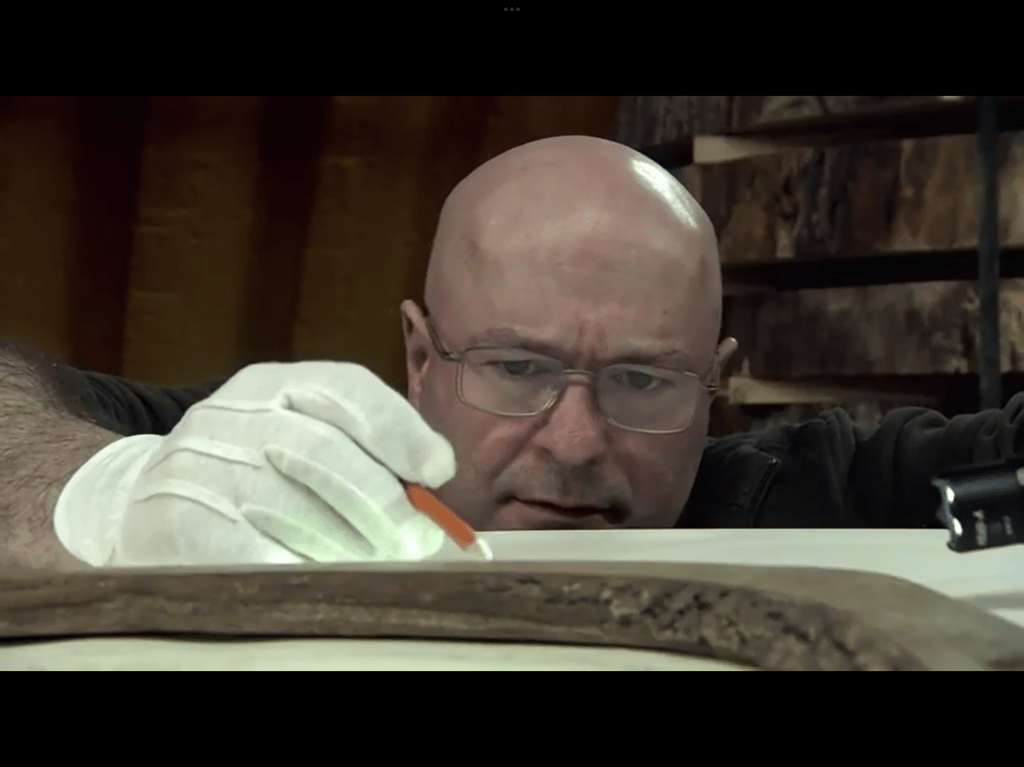
After being examined by expert woodworker Chris McAskill, the wood working techniques and machine tool marks point to a shipwright making the stick. The British Navy would have had access to these machines in the 1700s.
British Military / 35th Regiment of Foot
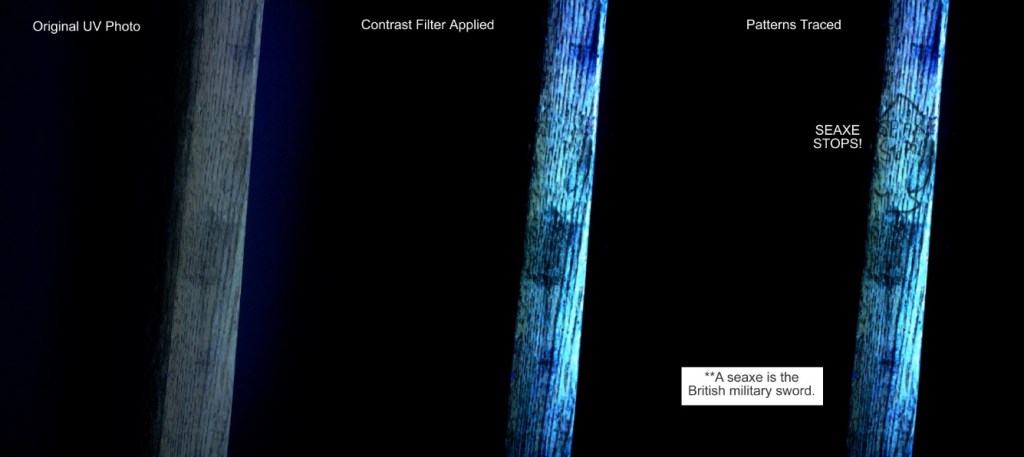
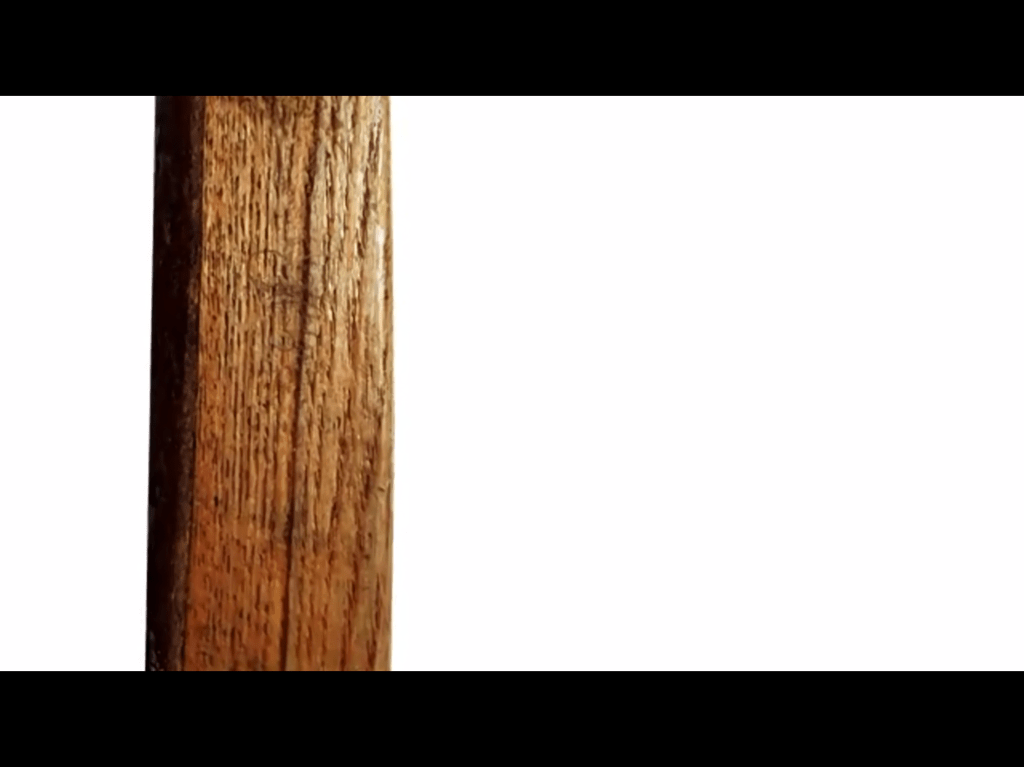
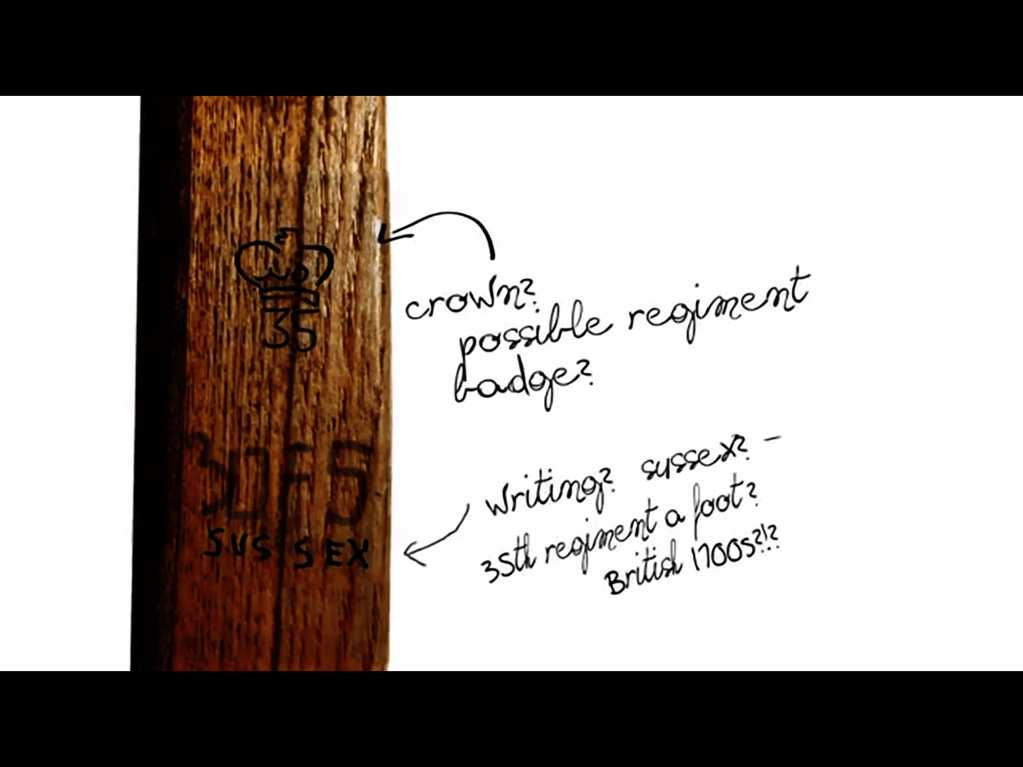
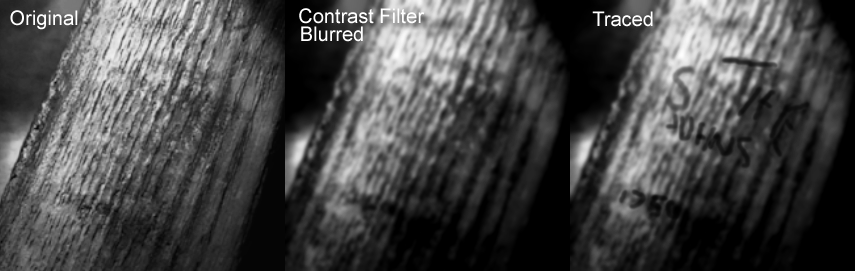
Upon a closer examination of the stick it became apparent that traces of old writing was still present on it. Photographing the stick under UV light the writing started to appear. “Seaxe Stops!” in a spade symbol was the first reference to the British Military. The Seaxe is the British Military sword. A crown with 35 was then discovered. The 35th Regiment of Foot was in North America during the French & Indian War, and a brief time during the Revolutionary War.
35th Regiment Uniform Threads
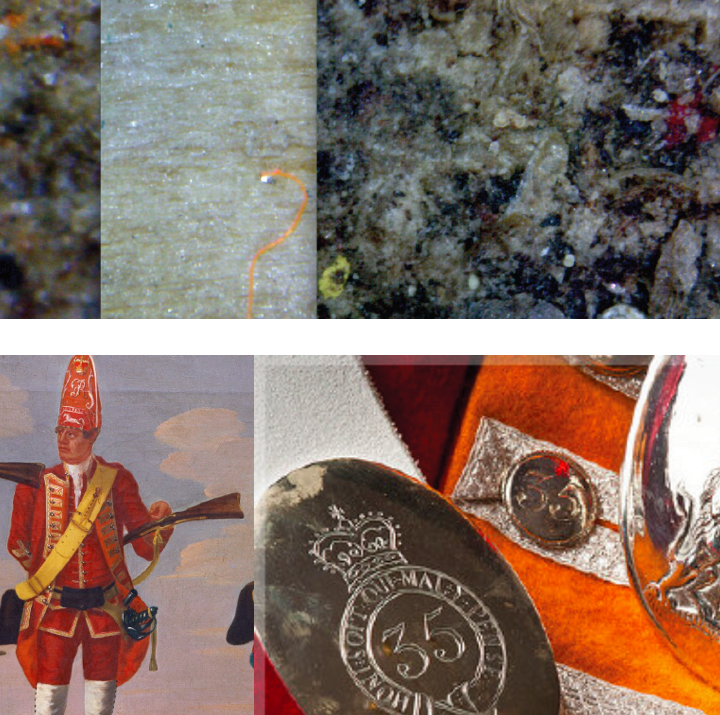
Looking at the stick under a microscope we see threads that perfectly match the colours of the 35th Regiment of Foot stuck in the varnish. Red, Yellow, and Orange threads are present. Orange threads are unique to the 35th Regiment, as it was the colour of the facings on their jackets.
St Johns Fair 1759
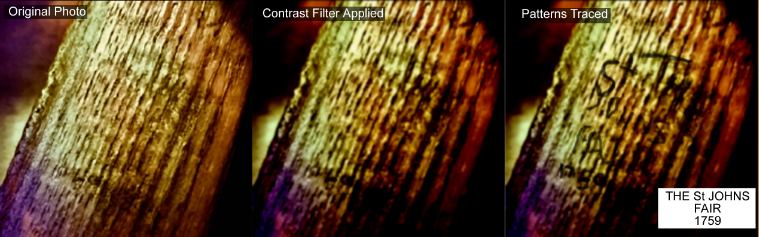
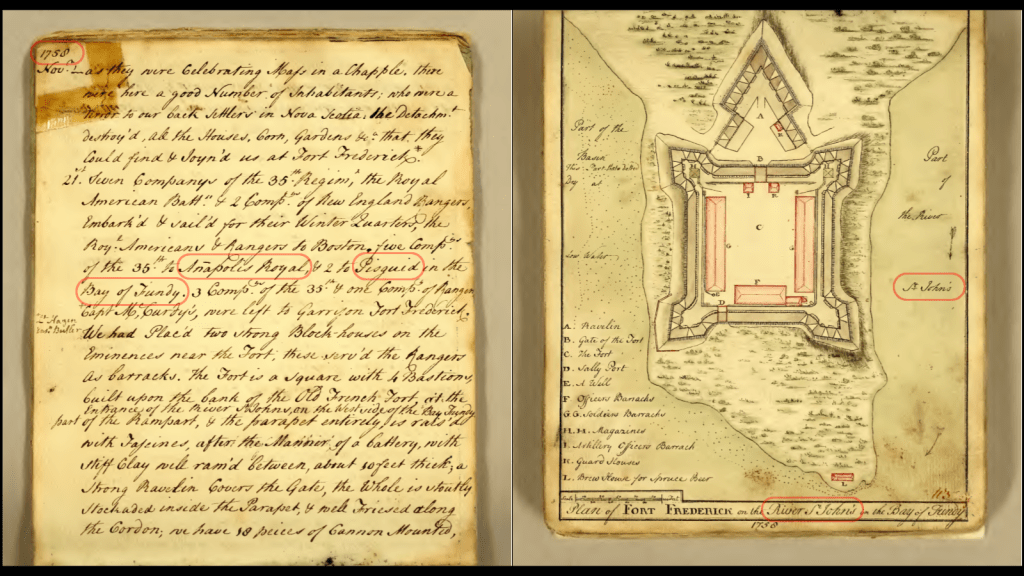
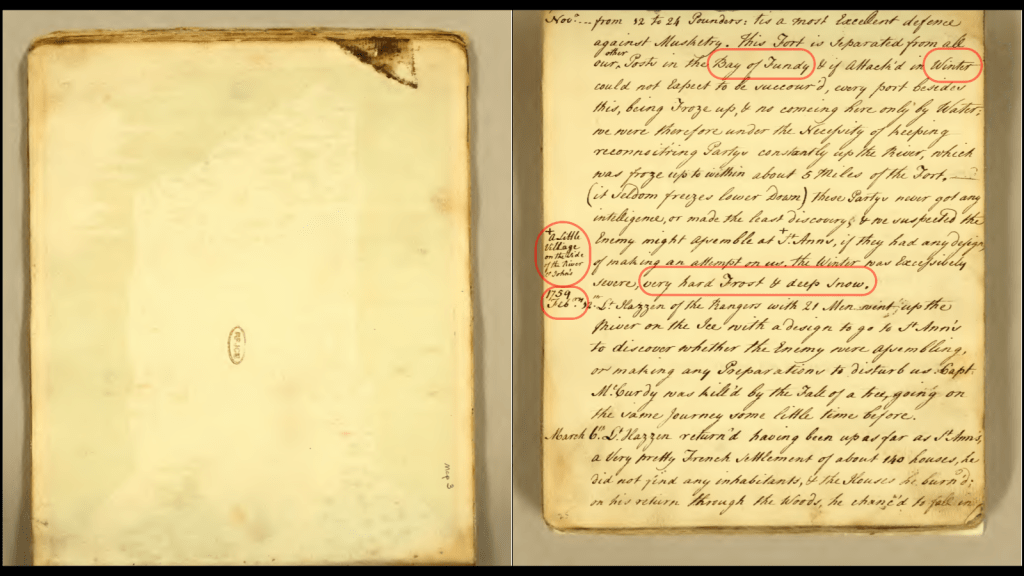
St Johns Fair 1759 is also written on the stick. Where was the 35th Regiment in 1759? They spent the winter in the Bay of Fundy at Pisiquid (Windsor), Royal Annapolis, and Fort Frederick on the St John River, current day Saint John, New Brunswick. In their war journal for the French and Indian War, the 35th Regiment refer to the St John River as the St John’s River on multiple occasions. Most likely they are referring to a “Frost Fair” they held on the river. Frost Fairs were common in England in the mid 1700s, and are well documented. This would be the earliest account of hockey games being played in Canada by British Soldiers.
 18th & 19th Century Hockey Sticks